
Arvix Laboratories · Patient Guide
Chickenpox (Varicella): Symptoms, Spread, Care and Prevention
Updated October 17, 2026
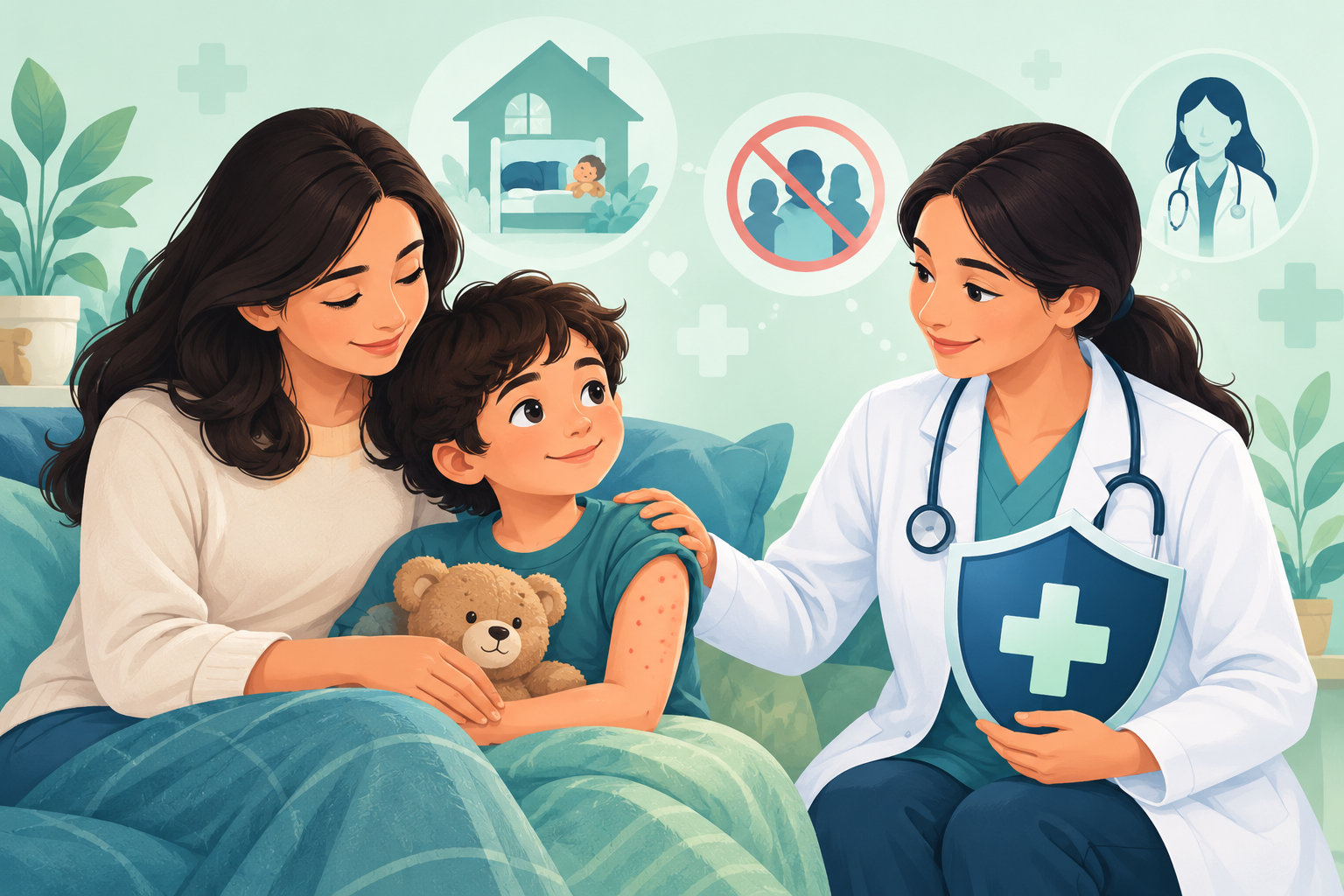
Chickenpox, also called varicella, is a contagious infection caused by the varicella-zoster virus. It often causes an itchy, blister-like rash and fever. Many children recover at home, but chickenpox can sometimes become serious, especially for pregnant people, newborns, adults, and people with weakened immune systems.
Common signs to know
- Fever, tiredness, or reduced appetite
- An itchy rash that may begin as small spots, then become fluid-filled blisters and scabs
- New spots appearing in crops over several days, sometimes at different stages at the same time
Symptoms commonly begin 10 to 21 days after exposure. A rash can have other causes, so contact a healthcare professional for advice rather than relying on appearance alone.
How chickenpox spreads
The virus can spread through the air and through contact with fluid from blisters. A person may spread chickenpox from 1 to 2 days before the rash appears until all blisters have crusted. If a vaccinated person has spots that do not crust, follow a clinician’s advice about when it is safe to return to school or work.
If chickenpox is suspected, stay home and avoid close contact with others—especially pregnant people, newborns, and anyone with a weakened immune system. Call a clinic before visiting so staff can help reduce exposure to other patients.
Comfort and care
Encourage rest and fluids. Keep fingernails short and try to avoid scratching, which can injure the skin. Ask a doctor or pharmacist before giving medicines, especially to a child. Never give aspirin to a child with chickenpox. Do not start antiviral medicines without a clinician’s advice; they are needed only in some cases.
When to seek medical help
Contact a healthcare professional promptly if the person with a rash is pregnant, a newborn or young infant, an adult, or has a weakened immune system. Seek urgent care for trouble breathing, unusual confusion or difficulty waking, signs of dehydration, a very unwell appearance, or skin around blisters that becomes increasingly red, warm, painful, or produces pus. If someone at higher risk has been exposed, call a clinician promptly even before symptoms appear.
Prevention matters
Vaccination is an important way to prevent chickenpox and severe illness. Ask your doctor which vaccine recommendations apply to your age, health, and vaccination history. People who are pregnant or have certain immune conditions should get medical advice before considering a live chickenpox vaccine.
This article is for general awareness and does not diagnose illness or replace advice from a qualified healthcare professional. For personal medical concerns, contact your doctor.